

There are jobs and there are jobs…
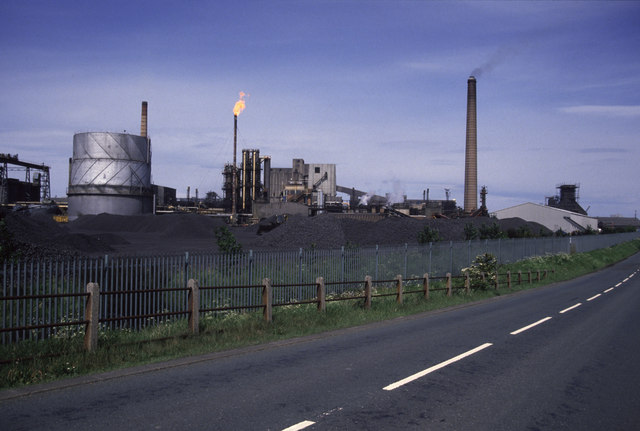
Monckton Coke Works By Chris Allen, CC BY-SA 2.0, https://commons.wikimedia.org/w/index.php?curid=7856382
Everybody has heard of the 1936 Jarrow March – 200 men walking from the eponymous South Tyneside town to London to protest at the closure of a shipyard and the deindustrialisation of the area. But it was just one of several ‘hunger marches’ in the 20s and 30s and, in response to the 1932 march from Jarrow, the Government built a brand new coke works in nearby Monckton in 1936. Jobs! Yey!
However, as housing grew up around the site in the 50s and 60s, the double edged sword of employment and air pollution became all too apparent – the nearest street became known as ‘Death Row’ and there was said to be an oxygen cylinder in every house. After a clean air campaign was launched in the late 80s, the plant was closed in 1990. It’s now a country park which I cycle through on a regular basis, using the same old wagonway along which coal wagons used to run under gravity to feed the dirty beast.
I often think about Monckton when we hear politicians call for jobs at any costs, in particular the “We can’t tackle climate change because some people might lose their jobs.” line pushed by Union leaders and MPs from across the political spectrum. Part of the argument for approving the Jackdaw oilfield was to create 27 jobs (against 200,000 or so lost in the North Sea in the last decade). To be facetious, being a hitman, drug kingpin or pickpocket is illegal – we don’t allow people to pursue careers which we judge harmful to society. So should we be pushing harmful economic activity in the name of jobs?
AI data centres are an interesting case. We are told we should embrace data centres as they are the economic future, but any substantial number of jobs created is unlikely to be on site – a quick google suggests 20-100 full time positions for a standard sized facility (my experience of such estimates is you assume the lower limit). So the local community gets the impact: air pollution (if the facility has its own generators), noise, visual impacts, but very little benefit to show for it. I’ve long argued that the sector is inflating a classic bubble for itself – as Anthropic goes for an IPO, its annual losses are five times revenue – but I didn’t foresee the level of local resistance data centres are facing in the US and increasingly elsewhere.
Just as the local people around Monckton Coke Works campaigned for the site to be shut down, groups are now springing up to oppose data centres. It is clear in both cases that people in the front line of serious impacts do not see ‘Jobs!’ as a panacea. In the same way some have tried to revise GDP so that harmful and benign economic activities are not lumped in together, maybe we should be striving to distinguish sustainable jobs and unsustainable jobs, so decisions skew towards a sustainable future. Any takers?