

AI and Net Zero: I have thoughts…
© Overearth, istockphoto.com
Back in 1993, I coded a recurrent neural network as my final year degree project (the only part of my finals where I got a first). This was a very simple version of today’s models (it had one ‘hidden level’ of nodes between input and output compared to 7-8 in a modern neural network) and on the computers of the day, it still took over an hour to see if it was working at all – debugging it was a real drag, but one day I found a missing semicolon and bingo!
Like most technologies, there’s a really long gradual curve between the initial concept and the sudden surge to ubiquity. All the technologies in an iPhone were available at least 20 years before that little shiny rectangle changed everything overnight, they just needed to mature. And we seem to have hit that point over the last 12-24 months with AI.
I played with the idea of illustrating this post with a version of the Anakin/Padme Star Wars meme. Anakin announces AI will change the world, Padme asks “for the better, right”, Anakin glowers menacingly and then it cuts back to Padme suddenly adorned with an improbable cleavage. I was put off using it by the ‘phwoars’ in the comments below the meme which suggested many had missed the whole point of the joke – the vast majority of AI use is either unasked for (those Google summaries ripped off Wikipedia) or what my kids call ‘AI slop’.
In my predictions for 2026, I said I wasn’t worried about the AI-induced energy/water demand as I think the bubble is going to burst. Vast sums are being invested in data centres and yet no-one knows where the income is going to come from. I mean, a company optimising airflow through a wind farm might pay for AI models, but who is going to pay for text summaries or to create casually sexist fantasies? It has dotcom written all over it.
But there’s another angle. Almost every high-level politician is going all in for AI. The great and the good (cough) are currently in Dehli talking business. But are they talking about jobs? The ‘jobs created’ by a massive data centre can be measured in the mere dozens (once you strip out the dubious ‘jobs during construction’ figures, which you always should). But AI rips off the intellectual property of millions and is already rendering many creative jobs redundant*. Where is the outcry? Tumbleweed…
We certainly get an outcry when an already failing oil refinery closes or when the head of a failing car company blames EV mandates for their woes (the reality is car sales are falling overall). “Save the jobs!” shout people who never complained about the serious deindustrialisation during the 1980s and 90s as the economy globalised. It is generally labour costs that send industry overseas, not energy costs – if you buy a new car, only 1% of the price you pay was set by energy use on the assembly line.
Contrary to the media/populist line, there are serious skills shortages (read: high quality jobs available) in the clean energy sectors, but they rarely get any coverage. This is why you often find populists (I’m looking at you, Dame Angela) cutting the ribbon on a solar array one day and decrying Net Zero the next.
So on one hand we have an industry with a heavy environmental load which will destroy jobs, and on the other we have a sector which will make the future liveable and provides new, meaningful jobs. Which should we invest in? Which should the press and politicians be lauding? Should be a no-brainer, no?
Of course the reality is there is loads of money behind AI, and loads of money trying to resist the march of clean energy. And money talks.
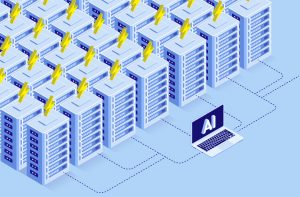
* This post is illustrated with a paid-for stock image created without AI. I do use AI occasionally – I’m not a Luddite.
1 Comment
Leave your reply.