

How data gets cherry-picked in the carbon culture wars
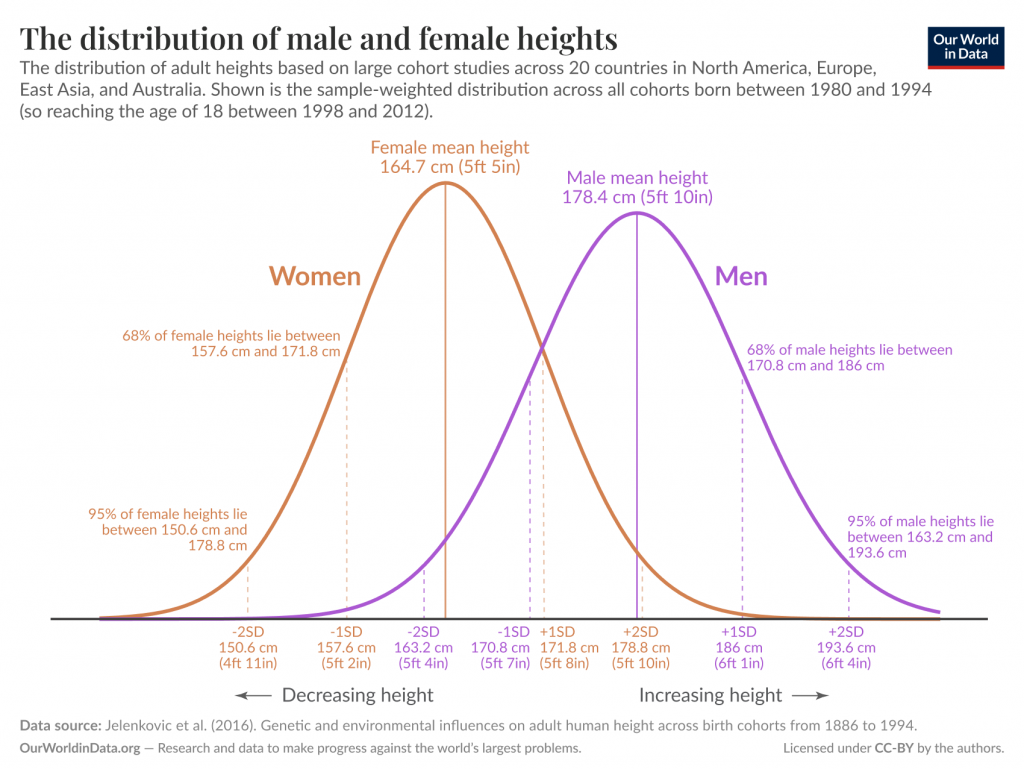
Across the world, men average 5 inches taller than women, but the distribution bell curves overlap (see above). This means you can get cases which defy those average figures, for example, the average Dutch woman and the average Japanese man are roughly the same height. But nobody in their right mind would extrapolate this fact to claim all women are the same height as all men.
Would they?
Unfortunately, such egregious abuse of statistics is all too common in the debate over the low carbon transition. Take last week’s report from Onward, a UK conservative think tank, which claimed that by investing in gas and nuclear instead of renewables, we could save UK households hundreds of pounds a year and still cut emissions by 80%. This report was endorsed by the Conservative Party’s Shadow Energy Secretary, Claire Coutinho and much of the right-leaning commentariat. The spods at Carbon Brief have found 10 serious flaws in the Onward report, but I will focus on just two to illustrate my point.
The biggest, flappiest red flag is the report’s assumption that gas prices will spontaneously return to pre-Ukraine war levels (ie 40% lower than today’s prices) and remain there for 20 years. The report’s many defenders point out that this was taken from official Government figures, but it wasn’t a prediction they lifted, it was a low gas price scenario. In other words the best possible scenario for gas, but a highly unlikely one – unless of course they want the world to start buying gas off Putin again.
A contrasting flaw is that Onward have assumed that ‘constraint’ payments for renewables will remain at current levels, while also factoring in the costs of planned grid upgrades – upgrades which are explicitly designed to reduce constraint payments by maximising the use of available renewable energy at any one time. So Onward are claiming all that investment will completely fail to deliver on its core purpose, which again is technically possible but extremely unlikely.
It is no surprise that if you compare the best possible case scenario for gas and the worst possible outcomes for renewables, gas looks favourable. But that’s just as stupid as comparing the heights of Dutch women and Japanese men and saying men and women are the same height. The Grantham Institute’s Bob Ward pithily labels this ‘policy-based evidence making’ – you start with the conclusion you want and then go and find the data that supports it. It’s hard to disagree, and depressing that so many in positions of influence are blithely endorsing it, simply because it appears to validate their pre-conceived beliefs.